

Waste, Refuse, and Pollution Management Plan
The Company prioritizes reducing waste, refuse, and pollution by implementing measures to ensure resources are utilized with maximum efficiency and in an environmentally friendly manner.
Objectives
- Reduce the amount of waste and refuse generated from internal organizational activities.
- Increase the proportion of waste reuse and recycling - Promote an organizational culture that considers environmental and sustainability aspects.
Goals
- Reduce total waste by at least 5% by 2025 (compared to 2024).
- Increase the rate of waste reuse/recycling to 5% of total waste by 2025.
Key Measures and Activities
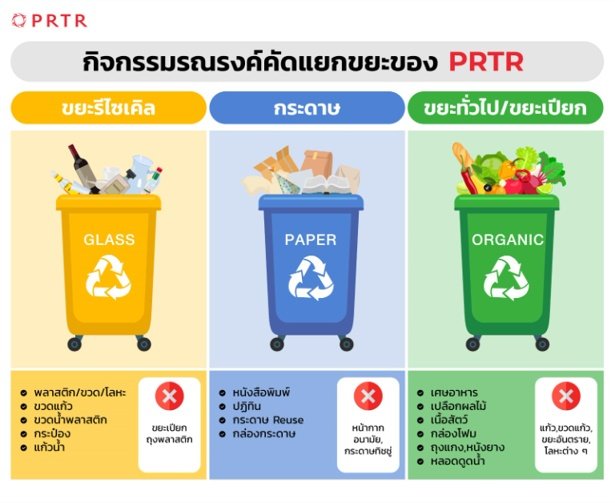
- Source separation of waste, such as establishing waste separation points within the office (e.g., general waste, recyclable waste, hazardous waste) along with informational signs.
- Promote Reuse and Recycle, such as utilizing office documents/materials efficiently and reducing plastic usage.
Performance and outcomes of waste management
The Company prioritizes reducing waste, refuse, and pollution from its operations by focusing on efficient resource utilization, while promoting waste segregation, reuse, and recycling to minimize environmental impact and support sustainable business practices. The Company has established waste segregation points in various areas within the office, coupled with awareness campaigns to educate employees on reducing the use of non-recyclable materials and encouraging the selection of environmentally friendly materials, thereby fostering an organizational culture that values responsible resource consumption.
In 2025, the Company can summarize the data on waste and refuse generated from internal activities as follows:
- Total waste and refuse amounted to 15,511 kilograms, an increase from 2024, which had a total waste and refuse volume of 4,993 kilograms.
- The volume of waste and refuse reused or recycled amounted to 1,079 kilograms, an increase from 2024, which had a volume of 252 kilograms, representing 6.96 percent of the total waste volume.
- The increase in waste and refuse volume in 2025 compared to the previous year is partly due to 2024 being the first year the Company systematically initiated its waste and refuse management project, with data collection commencing in Q4. Consequently, the data for 2025, which was collected comprehensively throughout the year, more clearly reflects the actual waste generated from operations. Furthermore, the organization's growth, both in terms of employee numbers and increased return to office work, has also led to a proportional increase in internal activities.
- Nevertheless, the Company has continuously increased the volume and proportion of waste and refuse reused and recycled through campaigns, internal communication, and the establishment of appropriate waste segregation systems. This reflects the effectiveness of environmental measures and employee cooperation in efficient resource utilization, which contributes to reducing environmental impact and fostering long-term sustainable growth.
- In addition, the Company also emphasizes enhancing employees' knowledge and understanding of proper waste segregation through continuous internal communication and activities. Such activities reflect the concept of efficient waste management and can be applied as a guideline for long-term environmental operations, while also supporting the regular organization of activities to instill an organizational culture that recognizes social and environmental responsibility.
Waste management: Waste Generation
| 2023 | 2024 | 2025 | |
|---|---|---|---|
| Total waste generated (Kilograms) | N/A | 4,993.00 | 15,511.00 |
| Total non-hazardous waste (kilograms) | N/A | 4,993.00 | 15,511.00 |
Waste management: Waste reuse and recycling
| 2023 | 2024 | 2025 | |
|---|---|---|---|
| Total reused/recycled waste (Kilograms) | N/A | 252.00 | 1,079.00 |
| Reused/Recycled non-hazardous waste (Kilograms) | N/A | 252.00 | 1,079.00 |